
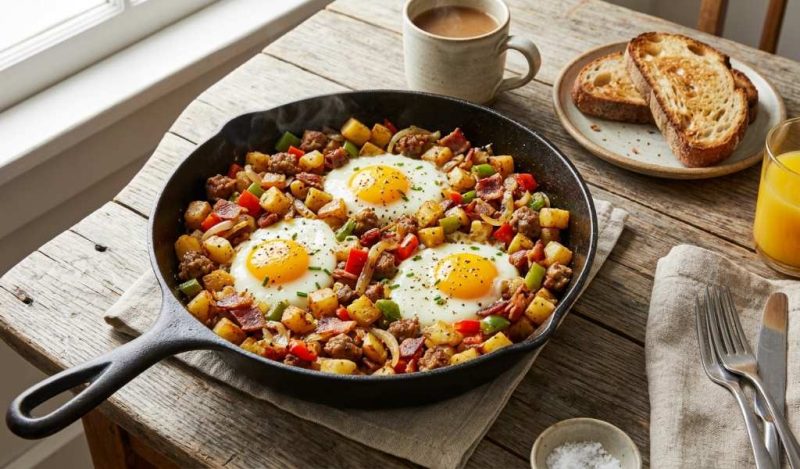
The heartiest breakfast ideas with eggs and potatoes lean on crispy home fries, a Spanish tortilla, or a loaded baked potato boat. Each one pairs the staying power of starch with the complete protein of eggs for a meal that actually lasts through a long morning. Choosing the right potato variety matters just as much as the technique.
Few combinations satisfy a hungry table the way eggs and potatoes do. The pairing shows up across cuisines, from a diner skillet to a Spanish tapas bar, because the textures and flavors genuinely work together. This guide breaks down the best potato varieties, the techniques that guarantee crispness, and three filling recipes worth adding to your rotation of breakfast ideas with eggs.
Why This Pairing Feels So Satisfying
Eggs deliver fast, complete protein, while potatoes bring volume, fiber, and slow releasing carbohydrates. Together, they create a meal that keeps you full for hours rather than minutes. That staying power is exactly why this combination shows up so often at diners and family breakfast tables.
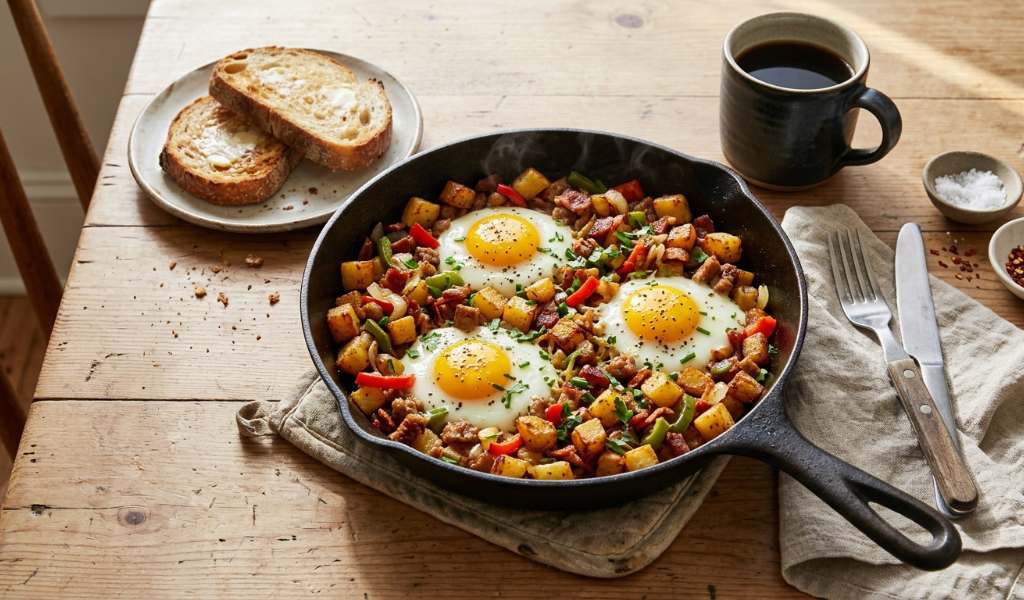
Potatoes also carry potassium, vitamin C, and a reasonable dose of fiber, especially when the skin stays on. Pairing that nutrition with the vitamins already found in eggs builds a genuinely balanced plate. Few breakfast combinations pack this much nutrition into something that still feels indulgent.
Texture plays a role too, and it should not be underestimated. The contrast between a crisp, golden potato edge and a soft, runny egg yolk is part of what makes this dish so craveable. Getting that contrast right depends almost entirely on potato choice and cooking technique.
Best Types of Potatoes for Morning Skillets
Different potato varieties behave very differently once they hit a hot pan, so the choice genuinely matters. Starchy potatoes break down more during cooking, while waxy ones hold their shape under heat. Knowing which type suits which dish prevents a lot of kitchen frustration.
: Russet potatoes carry high starch and low moisture, making them the top choice for crispy home fries : Yukon Gold potatoes hold a firmer structure, which suits dishes like a Spanish tortilla that need clean slices : Red potatoes keep their shape well in a skillet hash, since their thinner skin and waxy flesh resist breaking down : Fingerling potatoes bring a buttery flavor and naturally elongated shape that works well roasted alongside eggs
Russets crisp up beautifully because their higher starch content browns more aggressively in hot fat. Waxy potatoes, like Yukon Golds and reds, resist that same deep browning but hold together far better when sliced thin. Matching the variety to the dish, rather than grabbing whatever is on hand, consistently produces better results.
Recipe One: Classic Diner Style Home Fries With Over Easy Eggs
Diner style home fries start with dicing russet potatoes into roughly half inch cubes. Parboiling them for about five minutes before frying softens the interior while keeping the exterior intact. Draining and drying the potatoes thoroughly afterward is the step most home cooks skip, and it matters.
Heat a generous layer of oil in a cast iron or heavy skillet until it shimmers. Add the potatoes in a single layer, resisting the urge to stir too often, so each side gets real contact with the pan. Flipping only every few minutes builds the deep golden crust that defines a proper home fry.
Once the potatoes turn crisp and golden, push them to one side and crack two eggs into the cleared space. Cooking them over easy, flipping briefly to set the white while keeping the yolk runny, completes the plate in one pan. A sprinkle of chopped parsley and flaky salt finishes the dish without any extra effort.
Getting the Crisp Right Every Time
Moisture is the single biggest enemy of a crispy potato. Drying diced potatoes with a clean towel before they ever touch the oil removes the surface water that causes steaming instead of browning. Skipping this step is the most common reason home fries turn out soft.
Overcrowding the pan creates the same steaming problem, even with perfectly dried potatoes. Working in two batches, if your skillet feels tight, almost always beats forcing everything in at once. Patience during the frying stage pays off directly in the final crunch.
Recipe Two: Spanish Tortilla, the Potato and Egg Omelet
A Spanish tortilla layers thinly sliced potatoes with beaten eggs, then slow cooks the whole thing into a dense, sliceable cake. Thinly slicing Yukon Gold potatoes, about an eighth of an inch thick, ensures even cooking throughout. Cooking them gently in olive oil until tender, not browned, sets up the right texture for the final dish.
Draining the potatoes and folding them into a bowl of beaten eggs lets every slice get fully coated. Adding a pinch of salt at this stage seasons the dish evenly throughout. Pouring the mixture back into a hot, lightly oiled pan starts the slow cooking process that defines this dish.
Cooking the tortilla on low heat for several minutes per side, then flipping it carefully using a plate, produces that signature firm yet custardy center. Slicing it into wedges once fully cooled lets each piece hold its shape. Served warm or at room temperature, a tortilla works equally well for breakfast, brunch, or even a packed lunch.
Common Mistakes to Avoid
Cooking the potatoes at too high a heat during the initial stage toughens them before they ever reach the eggs. Keeping the heat low and patient during this step is worth the extra few minutes. Rushing this part almost always shows up in the final texture.
Flipping the tortilla too early, before the bottom has set, risks breaking the entire dish apart mid flip. Waiting until the edges look fully set and only the center still jiggles slightly signals the right moment. A confident, quick flip using a large plate as a lid works far better than a slow, hesitant one.
Recipe Three: Loaded Baked Potato Breakfast Boats
Baked potato boats start with a whole russet potato, baked until fully tender, usually about 45 minutes at 400 degrees Fahrenheit. Once cool enough to handle, slice it in half lengthwise and scoop out a portion of the flesh, leaving a sturdy shell. Mixing that scooped potato with shredded cheese and a little butter creates a flavorful base layer.
Crack an egg directly into the hollowed center of each potato half, then return the tray to the oven. Baking for another 12 to 15 minutes lets the egg set while the cheese melts into the surrounding potato. Topping each boat with crumbled bacon and a scatter of chives finishes the dish with color and crunch.
This recipe scales easily for a hungry household, since each potato becomes its own individual serving. Assembling several boats ahead of time and baking them together saves real effort on a busy weekend morning. Leftover boats also reheat reasonably well in a toaster oven the next day.
Tips for Getting Crispy Potatoes Every Time
A few consistent habits separate soggy potatoes from genuinely crispy ones across any recipe in this guide:
: Dry diced or sliced potatoes thoroughly before they touch any oil : Avoid overcrowding the pan, since steam builds up in a packed skillet : Let potatoes sit undisturbed for a few minutes before flipping or stirring : Use a heavy pan, like cast iron, for more even heat distribution : Finish with salt after cooking, since early salting draws out moisture
Applying these habits consistently turns potato and egg dishes from hit or miss into reliably excellent. Small technique choices, more than any single ingredient, separate a forgettable skillet from a genuinely great one.
Final Thoughts
Eggs and potatoes remain one of breakfast’s most reliable, satisfying pairings for good reason. Home fries, a Spanish tortilla, and loaded potato boats each showcase that combination in a completely different way. Mastering the potato side of the equation unlocks all three recipes at once.
Pick one of these dishes for your next weekend breakfast and pay close attention to the potato technique. Once that skill clicks, every hearty breakfast you make afterward gets noticeably better.
Frequently Asked Questions
What is the best potato for breakfast home fries?
Russet potatoes work best for crispy home fries because their high starch content browns more deeply than other varieties.
Can you make a Spanish tortilla ahead of time?
Yes, a Spanish tortilla holds up well in the fridge and tastes great served warm or at room temperature later.
Why do my home fries always turn out soggy?
Excess moisture and an overcrowded pan are the two most common reasons home fries turn soggy instead of crispy.
How long does it take to bake a potato for breakfast boats?
A whole russet potato takes about 45 minutes at 400 degrees Fahrenheit to bake fully tender.
Do you peel the potatoes for a Spanish tortilla?
Many traditional recipes skip peeling, though removing the skin creates a slightly smoother, more uniform texture if preferred.
