

Most dogs take between 8 and 12 hours to digest food, but complete processing through the digestive tract can take 12 to 30 hours depending on age, breed size, diet type, and health condition.
You feed your dog every day. But have you ever wondered what actually happens after the bowl is empty? Many owners assume digestion is quick. In reality, it is a structured biological process that affects energy levels, stool quality, hydration, and long-term health.
If digestion is too fast, nutrients are lost. If digestion is too slow, dogs may experience bloating, discomfort, or constipation. Understanding digestion timing helps you choose better feeding schedules, portion sizes, and food types.
Veterinary nutrition studies show that stomach emptying in healthy adult dogs usually occurs within 4 to 8 hours, while intestinal transit continues much longer. That means your dog may still be processing breakfast when dinner time arrives.
This guide explains how dog digestion works, what affects digestion speed, warning signs of problems, and how to improve digestive health safely.
What happens during the dog digestion process?
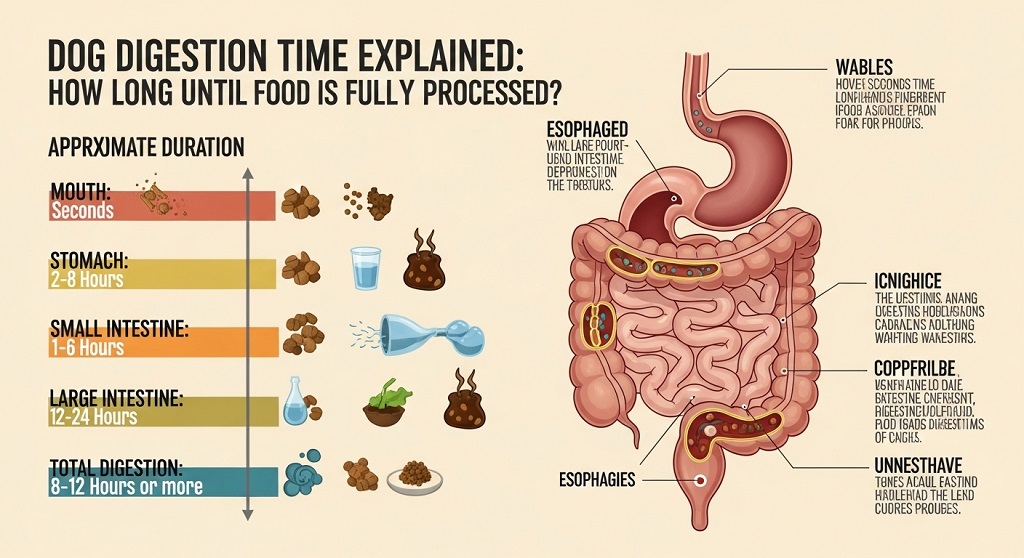
The dog digestion process begins in the mouth and ends when waste exits the body, typically within 12 to 30 hours.
Digestion happens in stages. Each stage plays a role in breaking food into usable nutrients.
1. Mouth and chewing stage
Dogs chew less than humans. Their teeth are designed to tear food rather than grind it. Saliva contains fewer digestive enzymes than human saliva, so chemical digestion starts later in the stomach.
2. Stomach breakdown stage
The stomach stores food and mixes it with acids. Protein digestion begins here. According to veterinary physiology research, stomach acid in dogs is stronger than in humans. This helps dissolve raw meat and bones more efficiently.
3. Small intestine absorption stage
This is where most nutrients enter the bloodstream. Enzymes from the pancreas and bile from the liver help break down fats, carbohydrates, and proteins.
4. Large intestine processing stage
Water absorption happens here. Remaining waste becomes stool before elimination.
Each stage affects how fast your dog gains energy from meals.
How long does food stay in a dog’s stomach?
Food usually stays in a dog’s stomach for 4 to 8 hours before moving into the intestines.
However, stomach emptying time depends heavily on food composition.
- High-protein meals digest slower
- Dry kibble takes longer than wet food
- Large meals delay stomach emptying
- Fat-rich diets slow digestion
A 2017 veterinary feeding study found that high-fat meals increased gastric emptying time by up to 30%. This explains why some dogs feel full longer after richer meals.
How long does digestion take in puppies vs adult dogs?
Puppies digest food faster than adult dogs because their metabolism is higher and their digestive systems are still developing.
| Dog Age | Average Digestion Time |
|---|---|
| Puppies | 4–6 hours |
| Adult dogs | 8–12 hours |
| Senior dogs | 10–16 hours |
Puppies require more frequent feeding because their stomach capacity is smaller. Senior dogs digest more slowly due to reduced enzyme activity and lower physical movement.
Does dog breed size affect digestion time?
Yes. Larger dog breeds typically digest food more slowly than smaller breeds.
Breed size influences metabolic rate and intestinal length.
- Small breeds: faster metabolism and digestion
- Medium breeds: moderate digestion speed
- Large breeds: slower digestion cycles
For example, Labrador Retrievers often digest meals slower than Chihuahuas due to differences in gastrointestinal transit time.
This affects feeding frequency recommendations.
How does dry food vs wet food affect digestion speed?
Wet dog food digests faster than dry kibble because it contains more moisture and requires less stomach processing.
| Food Type | Average Digestion Speed |
|---|---|
| Wet food | 4–6 hours |
| Dry kibble | 8–10 hours |
| Raw diet | 6–8 hours |
Moisture improves enzyme activity and nutrient absorption. Dry food requires additional hydration inside the digestive tract before breakdown begins.
This difference explains why dogs drinking less water may experience slower digestion when eating only kibble.
What factors slow down a dog’s digestion?
Several health and lifestyle factors can delay digestion in dogs.
- Low physical activity
- Large meal portions
- High-fat diets
- Stress or anxiety
- Age-related digestive decline
- Food intolerance
- Dehydration
A clinical veterinary review published in the Journal of Animal Physiology reported that inactive dogs show slower intestinal transit compared to active dogs.
That means exercise directly supports digestion.
What factors speed up digestion in dogs?
Balanced nutrition, hydration, and regular exercise help dogs digest food efficiently.
Healthy digestion depends on routine habits.
- Consistent feeding schedule
- Fiber-rich ingredients
- Access to clean drinking water
- Daily physical activity
- Proper portion control
Dogs fed on regular schedules show improved stool consistency and nutrient absorption compared to irregular feeding patterns.
How can you tell if your dog is digesting food properly?
Normal digestion produces consistent stool, stable energy levels, and a healthy appetite.
Watch for these signs of healthy digestion:
- Firm but moist stool
- Regular bowel movements
- No vomiting after meals
- Normal appetite
- Stable body weight
If stool becomes watery, unusually dry, or irregular, digestion may be disrupted.
What are warning signs of slow digestion in dogs?
Slow digestion can indicate gastrointestinal discomfort or underlying health conditions.
- Bloating after meals
- Constipation
- Lethargy
- Reduced appetite
- Excessive gas
- Vomiting undigested food
Veterinarians recommend monitoring symptoms lasting longer than 24 hours.
Early detection prevents complications.
How often should dogs be fed based on digestion time?
Adult dogs typically benefit from two meals per day spaced 8–12 hours apart.
This schedule matches natural digestion cycles.
| Dog Age | Recommended Feeding Frequency |
|---|---|
| Puppies | 3–4 meals daily |
| Adults | 2 meals daily |
| Seniors | 2 smaller meals daily |
Feeding too frequently may overload digestion. Feeding too rarely may cause hunger-related stomach acid buildup.
Does exercise affect digestion time in dogs?
Yes. Moderate exercise improves digestion by stimulating intestinal movement.
However, intense exercise immediately after eating increases the risk of gastric dilation, especially in large breeds.
Veterinary guidelines recommend waiting at least 30–60 minutes after meals before vigorous activity.
This reduces digestive stress.
Can changing dog food affect digestion speed?
Yes. Switching dog food alters digestion time because ingredients change nutrient composition and enzyme response.
Sudden changes may cause:
- Loose stool
- Gas
- Vomiting
- Reduced appetite
Veterinarians recommend transitioning foods gradually over 5–7 days.
Conclusion: Why understanding dog digestion time improves your dog’s health
Dog digestion is not instant. Most dogs process food within 8–12 hours, but full elimination may take up to 30 hours depending on breed, diet, age, and activity level.
When digestion works well, your dog absorbs nutrients efficiently, maintains stable energy, and produces healthy stool. When digestion slows or speeds up too much, problems begin quietly before symptoms appear.
By choosing appropriate food types, feeding on schedule, encouraging exercise, and monitoring stool patterns, you create a strong foundation for long-term digestive health.
If you want better results, start observing your dog’s digestion today. Adjust feeding routines. Improve hydration. Watch behavior after meals. Small changes often produce measurable improvements.
Take action now: Review your dog’s feeding schedule this week and make one improvement that supports healthier digestion.
Frequently Asked Questions About Dog Digestion Time
How long after eating does a dog poop?
Most dogs poop within 6–12 hours after eating. However, timing varies depending on diet type, hydration level, and activity. Puppies usually eliminate faster than adults.
Is it normal for dogs to digest food overnight?
Yes. Many dogs continue digestion during sleep. Complete processing often takes 12–30 hours, so overnight digestion is expected.
Can stress affect a dog’s digestion speed?
Yes. Stress slows digestion by reducing intestinal movement. Travel, environmental change, or separation anxiety can delay bowel activity temporarily.
Does fiber help dogs digest food faster?
Moderate fiber supports smoother digestion and regular bowel movement. However, excessive fiber may slow nutrient absorption if not balanced properly.
Why does my dog poop immediately after eating?
This response is called the gastrocolic reflex. It signals the colon to empty when the stomach fills. It is normal in healthy dogs.
How long does dry kibble stay in a dog’s system?
Dry kibble typically stays in the digestive system for 10–12 hours before elimination begins. Hydration level influences timing.
When should I worry about slow digestion in dogs?
If constipation, vomiting, or appetite loss continues longer than 24 hours, consult a veterinarian. Persistent symptoms may indicate gastrointestinal issues.
Related Topics: How to Meal Prep Healthy Lunches for Work (Simple Plans)
What Next: How to colour drench your kitchen
