
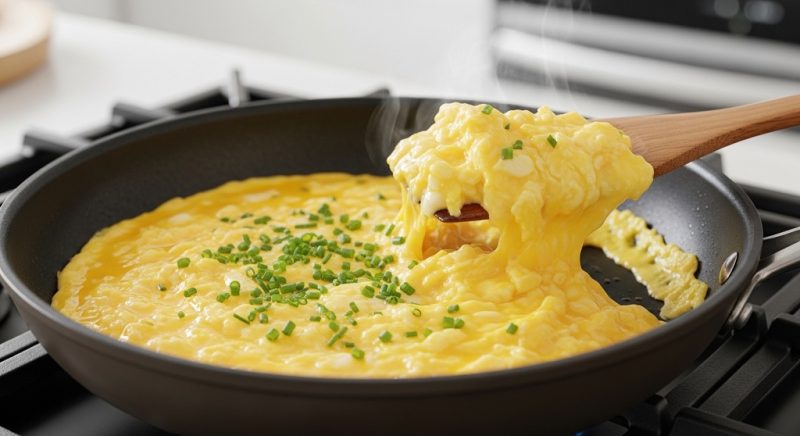
Most people think scrambled eggs are the easiest thing to cook. Crack eggs, stir, heat, done. Yet the result often turns dry, rubbery, watery, or bland. That happens because the cooking method is wrong—not the ingredients.
What Is the Chef Method for Perfect Fluffy Scrambled Eggs?
Snippet Answer: Chefs cook fluffy scrambled eggs by using low heat, constant gentle stirring, and removing eggs from the pan before they fully set. They avoid over-whisking, add fat like butter early, and control moisture carefully. This method produces soft curds, creamy texture, and evenly cooked eggs without dryness or rubberiness.
Answer Block: The chef method for fluffy scrambled eggs uses low heat, gradual cooking, early butter addition, and continuous gentle stirring. Eggs are removed before fully firm because residual heat finishes cooking. This creates small, tender curds with creamy consistency instead of dry or rubbery scrambled eggs.
Most home cooks treat scrambled eggs like a fast dish. Chefs treat them like a temperature-sensitive protein. Eggs begin tightening at low heat, which means cooking too quickly forces moisture out and creates toughness.
The chef method slows everything down. Butter goes into the pan first. Eggs cook gently. Stirring stays controlled and continuous. Heat remains low from start to finish.
Another key difference is timing removal. Eggs continue cooking after leaving the pan. Chefs stop cooking early so the final texture stays soft instead of firm.
This method produces three visible improvements:
- Smaller, softer curds
- Moist interior texture
- Even color without browning
Restaurant scrambled eggs look glossy because they retain moisture. That moisture is the result of heat control—not extra ingredients.
Why Do Scrambled Eggs Turn Dry Instead of Fluffy?
Answer Block: Scrambled eggs become dry when cooked at high heat, stirred too aggressively, or left on the pan too long. Overcooking forces moisture out of egg proteins, creating rubbery texture. Using low heat and removing eggs early preserves softness and improves fluffiness significantly.

The biggest mistake people make is cooking scrambled eggs too fast. Eggs are delicate proteins. When exposed to high heat, they tighten quickly and release water.
Once that moisture escapes, the eggs cannot regain softness. Instead, they become grainy or rubber-like.
Another common issue is delayed removal from the pan. Even after turning off heat, eggs continue cooking. This extra cooking time changes texture dramatically.
There are four main reasons scrambled eggs lose fluffiness:
- High cooking temperature
- Late removal from pan
- Over-whisking before cooking
- No added fat during cooking
Fat slows protein tightening. That is why chefs add butter early. It protects texture and improves structure.
Stirring technique also matters. Aggressive stirring breaks curds too quickly. Gentle folding builds soft layers instead.
Once these factors are controlled, scrambled eggs become consistently fluffy without changing ingredients.
Should You Add Milk, Cream, or Butter to Scrambled Eggs?
Answer Block: Butter improves scrambled egg texture by slowing protein tightening and adding moisture. Milk slightly softens eggs but can dilute flavor if overused. Heavy cream creates richer curds but is optional. Professional chefs prioritize butter because it enhances texture without weakening structure.
Many people believe milk makes scrambled eggs fluffy. That idea is partly true but often misunderstood.
Milk increases moisture slightly. However, too much milk reduces egg flavor and creates watery curds.
Butter works differently. Instead of diluting eggs, it coats proteins and slows tightening. This keeps eggs tender while preserving taste.
Heavy cream creates the richest scrambled eggs but is not necessary for everyday cooking.
Here is how each ingredient affects scrambled eggs:
| Ingredient | Effect on Texture | Flavor Impact | Chef Recommendation |
|---|---|---|---|
| Butter | Improves softness | Enhances richness | Highly recommended |
| Milk | Slight softening | Can dilute flavor | Optional |
| Cream | Very creamy curds | Richer taste | Occasional use |
| Water | Light fluffiness | No flavor change | Alternative option |
The chef method almost always includes butter because it improves both taste and texture simultaneously.
What Is the Best Heat Level for Cooking Scrambled Eggs?
Answer Block: Low heat produces the best scrambled eggs because it prevents protein tightening and moisture loss. Medium or high heat cooks eggs too quickly and creates dryness. Gentle, slow cooking allows curds to form gradually and results in creamy, fluffy scrambled eggs every time.
Heat control is the most important factor in scrambled egg quality.
Egg proteins begin firming at low temperatures. High heat accelerates this process and causes uneven cooking.
Professional kitchens rarely cook scrambled eggs on high heat. Instead, they use steady low heat and allow gradual curd formation.
Signs your heat is too high include:
- Browning on eggs
- Watery liquid separating
- Large stiff curds
- Dry surface texture
Low heat keeps eggs glossy and evenly structured. It also gives better control over stirring timing.
Cooking slower does not take much longer. It usually adds only one extra minute but dramatically improves results.
The ideal process is simple:
- Warm pan gently
- Add butter
- Pour eggs
- Stir continuously
- Remove before fully set
This sequence produces restaurant-quality scrambled eggs consistently.
How Do Chefs Stir Scrambled Eggs for the Perfect Texture?
Answer Block: Chefs stir scrambled eggs slowly and continuously using a spatula instead of rapid whisking in the pan. Gentle folding creates soft curds while preventing moisture loss. Controlled stirring ensures even cooking and maintains creamy structure throughout the eggs.
Stirring technique determines curd size and texture.
Fast stirring breaks eggs too aggressively. This creates tiny dry particles instead of soft layered curds.
Chefs prefer slow folding motions. A silicone spatula works best because it moves eggs evenly without tearing them.
The correct stirring method includes:
- Pull eggs from edges toward center
- Pause briefly between folds
- Keep movement consistent
- Avoid scraping too fast
This allows curds to form naturally.
Another chef technique involves lifting eggs slightly while folding instead of pressing them flat. That movement traps steam inside the curds and increases softness.
The goal is gentle structure—not speed.
Texture improves dramatically once stirring becomes controlled rather than rushed.
When Should You Remove Scrambled Eggs from the Pan?
Answer Block: Scrambled eggs should be removed when they look slightly undercooked and glossy because residual heat finishes cooking them after leaving the pan. Waiting until eggs appear fully firm results in overcooking and dryness by the time they reach the plate.
Residual heat continues cooking eggs for up to one minute after removal.
This is the step most home cooks miss.
If eggs look finished inside the pan, they are already overcooked by serving time.
Professional chefs remove scrambled eggs when they appear:
- Soft but structured
- Moist and glossy
- Slightly loose in texture
They should not look wet, but they should not look firm either.
Once transferred to a plate, remaining heat finishes the process naturally.
This technique preserves creaminess without needing extra ingredients.
Timing removal correctly transforms scrambled egg quality more than any seasoning adjustment.
What Ingredients Improve Flavor Without Ruining Texture?
Answer Block: Salt, butter, chives, black pepper, and cheese improve scrambled egg flavor without affecting texture when added at the correct time. Salt should be added before cooking, while delicate herbs and cheese should be added after cooking to preserve moisture and structure.
Seasoning timing matters as much as ingredient choice.
Salt added before cooking helps proteins retain moisture better during heating. This improves tenderness.
Pepper works best after cooking because heat can dull its flavor.
Fresh herbs should always be added last. Early addition releases moisture and weakens curd structure.
Cheese improves richness but should melt gently after eggs leave the pan.
Flavor-enhancing ingredients chefs commonly use include:
- Butter
- Fresh chives
- Parmesan cheese
- Black pepper
- Sea salt
These additions enhance scrambled eggs without changing their soft texture.
Balanced seasoning ensures eggs taste rich instead of heavy.
Can You Make Fluffy Scrambled Eggs Without Butter?
Answer Block: Fluffy scrambled eggs can be made without butter by using low heat, gentle stirring, and early removal from the pan. Adding water or olive oil helps maintain moisture. Technique matters more than ingredients when creating soft scrambled egg texture.
Butter improves flavor and softness, but it is not essential.
The chef method still works without it if heat control remains precise.
Water is a useful alternative because steam expands during cooking and creates lighter curds.
Olive oil adds mild richness while keeping eggs tender.
Key adjustments when skipping butter include:
- Cook slower than usual
- Stir more gently
- Remove earlier than normal
These changes protect moisture and structure.
Technique remains the deciding factor in fluffy scrambled egg success.
Conclusion: The Simple Method That Changes Everything
Scrambled eggs become fluffy when heat is controlled, stirring is gentle, and removal happens early. These three adjustments transform texture immediately.
The chef method does not require special tools or ingredients. It relies on timing, patience, and temperature awareness.
Cooking slowly keeps eggs moist. Adding butter protects structure. Removing eggs early prevents dryness. Together, these steps produce consistent restaurant-quality results at home.
Once this method becomes routine, scrambled eggs stop being unpredictable. They become reliable, soft, and flavorful every time you cook them.
Try this technique tomorrow morning. Adjust heat lower than usual, stir gently, and remove eggs slightly early. You will notice the difference immediately.
Mastering scrambled eggs is one of the fastest ways to improve everyday cooking confidence.
Frequently Asked Questions
Why are restaurant scrambled eggs softer than homemade eggs?
Restaurants cook scrambled eggs on low heat and remove them before fully set. Residual heat finishes cooking. This prevents dryness and creates smaller, softer curds compared to high-heat home cooking methods.
Do chefs add water instead of milk to scrambled eggs?
Some chefs add a small amount of water because steam improves fluffiness without weakening flavor. Unlike milk, water does not dilute egg richness while still improving texture.
Should eggs be whisked a lot before cooking?
Eggs should be whisked just enough to combine yolks and whites. Over-whisking adds excess air, which collapses during cooking and creates uneven scrambled egg texture.
Is it better to cook scrambled eggs in butter or oil?
Butter produces softer scrambled eggs because it slows protein tightening. Oil works but does not create the same creamy texture or flavor enhancement as butter.
Why do scrambled eggs release water after cooking?
Water release happens when eggs cook too quickly or too long. High heat forces moisture out of proteins. Lower heat prevents this issue and keeps eggs tender.
Can scrambled eggs be cooked without stirring constantly?
Constant gentle stirring ensures even curd formation. Without stirring, eggs cook unevenly and form large firm sections instead of soft fluffy layers.
What pan works best for scrambled eggs?
A nonstick pan works best because it prevents sticking and allows gentle folding. Stainless steel pans require more butter and careful heat control to achieve similar results.
Read More Also: Dog Digestion Time Explained: How Long Until Food Is Fully Processed
Learn More: How to Meal Prep Healthy Lunches for Work (Simple Plans)
