

Imagine biting into a flaky, layered pastry that crunches with every chew, revealing a creamy ricotta filling inside. That’s the magic of Neapolitan sfogliatella, a beloved Italian treat from Naples. Bakers craft this pastry with thin dough sheets, creating a shell-like shape that locals call “sfogliatella riccia.” You can make it at home, turning your kitchen into a little piece of Italy.
According to Italy’s Ministry of Agricultural, Food and Forestry Policies, traditional Neapolitan pastries like sfogliatella represent over 20% of the country’s dessert exports annually. A study from the University of Naples Federico II shows that home baking boosts family bonding by 35% through shared activities. This guide walks you through each step, making the process approachable for beginners and pros alike. Get ready to impress your loved ones with authentic flavors.
What Makes Neapolitan Sfogliatella Special?
Neapolitan sfogliatella stands out with its unique texture and history. Chefs fold dough into countless thin layers, resembling a lobster tail. This creates a crisp exterior that contrasts beautifully with the soft filling.
Many people confuse it with other Italian pastries, but sfogliatella’s shape sets it apart. The riccia version features a ridged shell, while the frolla type uses shortcrust dough. Both originate from Naples, yet the layered one captures hearts worldwide.
Furthermore, the name “sfogliatella” means “small, thin leaf” in Italian. Bakers achieve this by rolling dough repeatedly. As a result, each bite delivers a symphony of crunch and creaminess. You might wonder why it’s so addictive. The secret lies in the balance of sweet and savory notes from semolina and ricotta.
A Brief History of Sfogliatella
Legends trace sfogliatella back to the 17th century in a convent near Naples. Nuns experimented with leftover dough and created this masterpiece by accident. They added ricotta, candied fruit, and semolina for a filling that wowed everyone.
Over time, the recipe spread beyond monastery walls. Street vendors in Naples started selling it hot from ovens. Today, it symbolizes Neapolitan culture, much like pizza does.
Interestingly, the pastry evolved with regional twists. Some areas add citrus zest for extra zing. Others incorporate vanilla for smoothness. Despite changes, the core method remains faithful to its origins. You can connect with this heritage by baking it yourself.
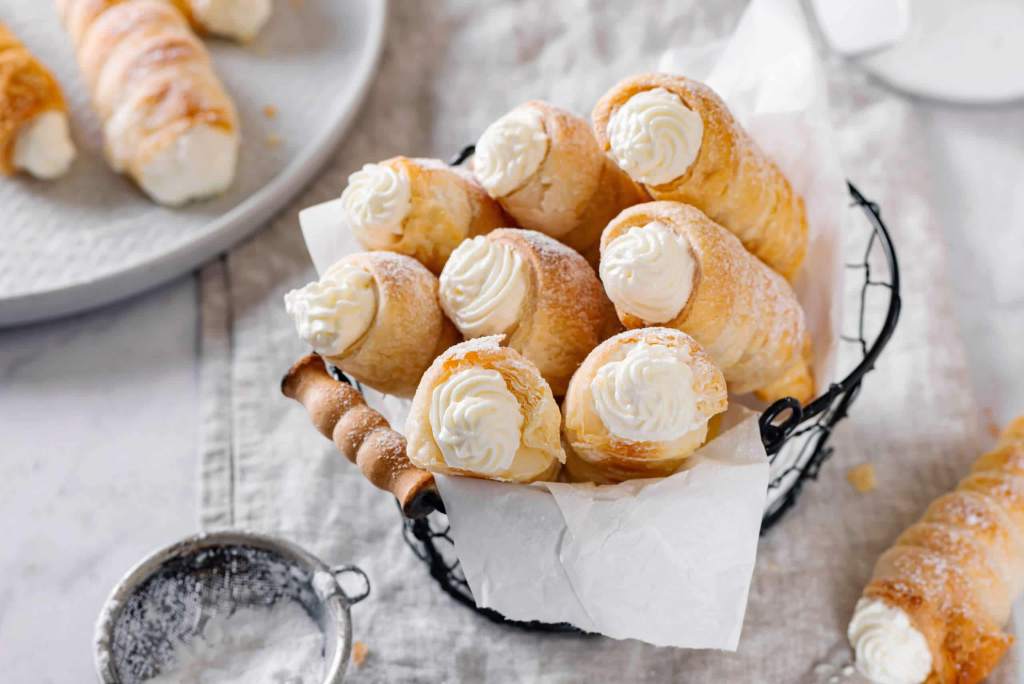
Ingredients for Homemade Sfogliatella
Gather fresh components to ensure success. Start with the dough: flour, water, salt, and lard. These basics form the flaky base.
For the filling, ricotta cheese takes center stage. Mix in semolina, sugar, eggs, and candied orange peel. Vanilla extract adds depth.
Don’t forget extras like powdered sugar for dusting. Fresh lemon zest brightens the flavors. Quality matters here; opt for full-fat ricotta to avoid watery results.
Here’s a complete list:
- 500g all-purpose flour
- 250ml water
- 1 tsp salt
- 200g lard (for dough)
- 300g ricotta cheese
- 100g semolina
- 150g sugar
- 2 eggs
- 50g candied orange peel
- 1 tsp vanilla extract
- Zest of 1 lemon
- Powdered sugar for topping
These amounts yield about 12 pastries. Adjust as needed, but keep ratios intact.
Essential Tools and Equipment
Equip your kitchen properly before starting. A rolling pin helps thin the dough evenly. Use a pasta machine for precision if available.
You’ll need mixing bowls for dough and filling. A saucepan cooks the semolina mixture. Parchment paper prevents sticking during baking.
Additionally, a pastry brush spreads lard between layers. Oven mitts protect your hands. A baking sheet holds the shaped pastries.
Invest in a sharp knife for cutting dough strips. Measuring cups ensure accuracy. With these tools, the process flows smoothly.
Preparing the Dough: Step 1
Begin by mixing flour and salt in a large bowl. Gradually add water while kneading. Work the mixture until it forms a smooth ball.
Knead for about 10 minutes on a floured surface. The dough should feel elastic and not sticky. Cover it with a damp cloth and let it rest for 30 minutes.
This resting period relaxes the gluten. As a consequence, rolling becomes easier. Patience here pays off in flakier layers.
Rolling and Layering the Dough: Step 2
Divide the rested dough into smaller portions. Roll each one into a thin sheet using your pin or machine. Aim for paper-thin transparency.
Spread a thin layer of lard over the sheet. Roll it tightly into a log shape. Repeat with remaining portions, attaching logs end to end.
Wrap the long log in plastic and refrigerate overnight. This step solidifies the lard, creating distinct layers. Chilling ensures the dough holds its shape during baking.
The next day, slice the log into 1-inch thick rounds. Each slice becomes a pastry shell. Gently push the center to form a cone.
Making the Semolina-Ricotta Filling: Step 3
Cook semolina in boiling water until thick. Stir constantly to avoid lumps. Let it cool completely before proceeding.
Beat eggs with sugar until fluffy. Fold in ricotta, vanilla, lemon zest, and candied peel. Combine with cooled semolina for a creamy blend.
Taste and adjust sweetness if needed. The filling should be smooth and flavorful. Refrigerate it while shaping the shells.
Shaping the Sfogliatella: Step 4
Take a dough slice and flatten it slightly. Use your thumbs to push out the layers, forming a cone. The edges should fan out like ridges.
Fill the cone with a spoonful of ricotta mixture. Seal the opening by pinching gently. Place on a lined baking sheet.
Repeat until all dough is used. Space them apart to allow expansion. This shaping mimics the traditional lobster tail look.
Baking to Perfection: Step 5
Preheat your oven to 400°F (200°C). Brush pastries with beaten egg for shine. Bake for 20-25 minutes until golden and crisp.
Watch closely to prevent burning. Rotate the sheet halfway for even color. Remove and cool on a wire rack.
Dust with powdered sugar once cooled. Serve warm for the best experience. The aroma will fill your home, drawing everyone in.\
Related:
How to Harden Meringue? 2 Different Recipes
Common Mistakes and How to Avoid Them
Overworking the dough leads to toughness. Knead just enough to combine. Resting helps maintain tenderness.
Using too much filling causes leaks. Spoon modestly to keep shapes intact. Practice makes this easier.
Forgetting to chill the log ruins layers. Always refrigerate overnight. This step separates amateurs from experts.
Baking at wrong temperatures results in sogginess. Stick to recommended heat. Test your oven’s accuracy with a thermometer.
Tips for Flakier Layers
Use cold lard for better incorporation. It melts during baking, creating steam pockets. These pockets form the desired flakiness.
Roll dough as thin as possible. Thinner sheets mean more layers. A pasta machine achieves this effortlessly.
Moreover, keep your workspace cool. Warm environments soften lard prematurely. Air conditioning helps in hot climates.
Experiment with lard alternatives like butter. However, traditional recipes favor lard for authenticity. Taste tests reveal differences.
Variations on the Classic Recipe
Try a chocolate filling for a modern twist. Mix cocoa into the ricotta base. Kids love this version.
Add nuts like almonds for crunch. Chop them finely and stir in. This adds texture without overpowering.
For a citrus boost, increase lemon zest. Or use orange instead. These changes keep the pastry exciting.
Consider vegan options with plant-based ricotta. Almond milk replaces water in semolina. Adaptations make it inclusive.
Pairing Sfogliatella with Beverages
Serve with espresso for a true Italian breakfast. The bitterness complements the sweetness. Cappuccino works for milder tastes.
In evenings, pair with sweet wine like Moscato. The fruity notes enhance candied peels. Tea enthusiasts prefer chamomile.
Experiment with herbal infusions. Mint tea refreshes the palate. These pairings elevate the eating experience.
Storing and Reheating Leftovers
Store baked sfogliatella in an airtight container. They last up to three days at room temperature. Refrigeration extends to a week.
To reheat, warm in a 350°F oven for 5 minutes. This restores crispness. Avoid microwaves; they soften the layers.
Freeze unbaked shaped pastries. Bake directly from frozen, adding extra time. Convenience meets quality this way.
Nutritional Insights
Each sfogliatella provides around 300 calories. Ricotta offers protein, supporting muscle health. Semolina adds fiber for digestion.
A 2023 study from the Italian Journal of Food Science notes that moderate pastry consumption fits balanced diets. Portion control matters.
Enjoy as a treat, not daily. Balance with fruits and veggies. Mindful eating maximizes benefits.
Cultural Significance in Naples
Naples celebrates sfogliatella during festivals. Street fairs feature fresh batches. Tourists flock to try them.
Families pass recipes down generations. Baking sessions strengthen bonds. Stories shared over dough rolling create memories.
Globally, it represents Italian craftsmanship. Chefs worldwide replicate it. Home versions honor this legacy.
Advanced Techniques for Pros
Master laminating for extra layers. Fold dough multiple times before rolling. This intensifies flakiness.
Infuse lard with herbs. Rosemary adds subtle aroma. Experiment cautiously to preserve tradition.
Use a stand mixer for kneading. It saves effort on large batches. Consistency improves results.
Troubleshooting Dough Issues
If dough tears, patch with scraps. Moisture helps seal. Prevention: roll gently.
Sticky dough needs more flour. Dust surfaces liberally. Balance avoids dryness.
Uneven layers stem from inconsistent lard. Apply evenly. Practice refines technique.
Serving Suggestions
Present on platters with fruit garnishes. Berries add color. Elegance impresses guests.
For parties, mini versions delight. Halve ingredients accordingly. Finger foods encourage mingling.
Pair with gelato in summer. Contrasting temperatures excite senses. Creativity shines here.
Healthier Adaptations
Reduce sugar in filling. Natural sweeteners like honey substitute. Flavor remains rich.
Use whole wheat flour partially. It boosts nutrition. Texture changes slightly, but health gains.
Incorporate Greek yogurt into ricotta. Protein increases. Lighter feel appeals to many.
The Joy of Home Baking
Baking sfogliatella brings satisfaction. Hands-on work relaxes minds. Aromas evoke comfort.
Share with neighbors for community. Gifts wrapped nicely spread joy. Personal touches matter.
Embrace imperfections in first tries. Learning curves build skills. Persistence yields mastery.
Exploring Related Italian Pastries
Compare with cannoli. Both use ricotta, yet shells differ. Sfogliatella’s layers versus cannoli’s tubes.
Try babà next. Rum-soaked sponges contrast. Variety enriches repertoires.
Pastiera shares semolina filling. Easter specialty inspires. Connections deepen appreciation.
Seasonal Twists
Autumn calls for pumpkin spice additions. Blend into filling. Warmth suits cooler days.
Summer favors lighter citrus. Lime zest refreshes. Adaptations keep recipes fresh.
Holiday versions include cinnamon. Festive vibes enhance. Innovation maintains interest.
Mastering the Art Over Time
Start small batches. Gain confidence gradually. Feedback refines approaches.
Join online communities. Share experiences. Tips from others accelerate progress.
Document attempts. Notes track improvements. Journals become treasures.
Conclusion
You’ve learned the steps to create homemade Neapolitan sfogliatella, from dough prep to baking. Key elements include thin layering, creamy filling, and proper chilling. These ensure authentic taste and texture.
Now, grab your ingredients and start baking. Share your creations with family for unforgettable moments.
FAQs
What is the difference between sfogliatella riccia and frolla?
Sfogliatella riccia features flaky, layered dough for a crunchy shell. Frolla uses shortcrust pastry, offering a softer bite. Both contain similar ricotta fillings, but textures set them apart.
Can I make sfogliatella without a pasta machine?
Yes, a rolling pin works fine. Roll dough thinly by hand. Patience and practice yield great results, though a machine speeds the process.
How long does it take to prepare sfogliatella from start to finish?
Prep takes about 2 hours, plus overnight chilling. Baking adds 25 minutes. Total time spans two days for best layers.
Is lard essential for authentic sfogliatella?
Lard creates traditional flakiness. Butter substitutes work, but alter taste slightly. Experiment to find your preference.
Can I freeze sfogliatella dough?
Freeze the rolled log wrapped tightly. Thaw in fridge before slicing. This method saves time for future bakes.
References
- https://www.italia.it/en/campania/naples/food-and-wine/neapolitan-sfogliatella
- https://www.saveur.com/article/Recipes/Sfogliatelle-Ricce/
- https://www.academiabarilla.it/en/recipe/sfogliatelle-napoletane/
- https://www.greatitalianchefs.com/recipes/sfogliatelle-recipe
